
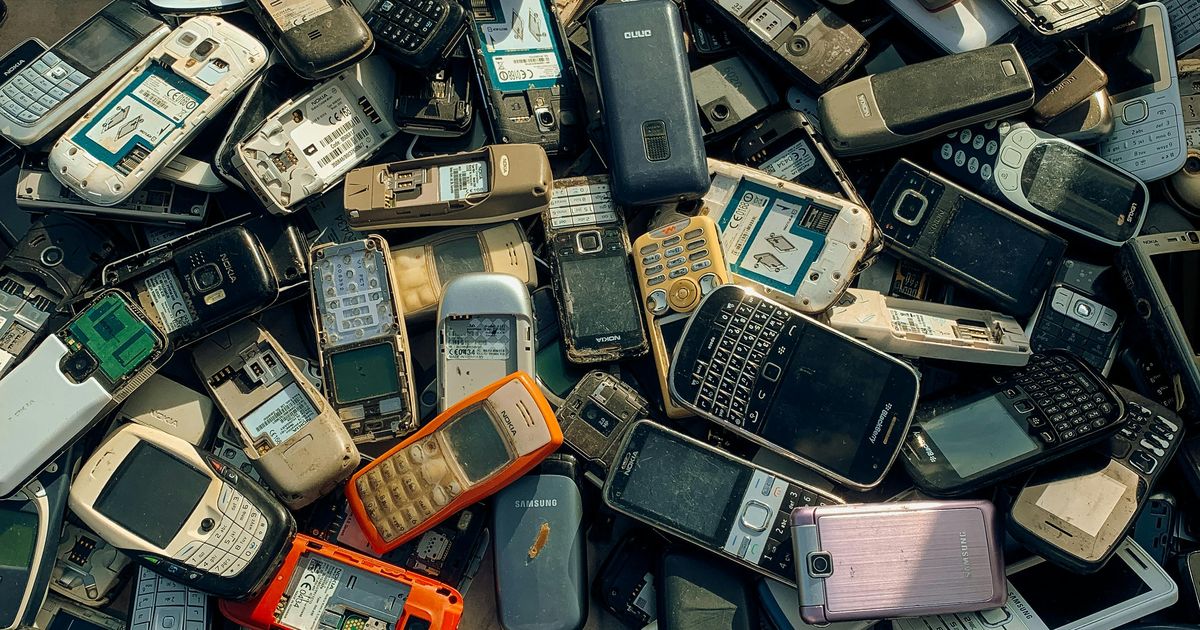
Most conversations about e-waste start and end with the environment. And the environmental case is real — but if that were enough to change behavior, we wouldn’t be generating record amounts of electronic waste every year.
The truth is, responsible IT disposal is a business decision. It affects your regulatory risk, your data security posture, your balance sheet, and your reputation. Here are the numbers that make the case.
The Scale
The Global E-waste Monitor reports that worldwide e-waste generation surpassed 60 million metric tons annually and is projected to reach nearly 82 million metric tons by 2030. Only about 20% of global e-waste is formally documented as being collected and recycled.
That means roughly 80% of the world’s electronic waste is unaccounted for. It’s in landfills, in informal processing operations, in warehouses, or simply unknown. Some of it is sitting in your storage closet right now.
The Regulatory Landscape
In the United States, e-waste regulations vary by state, but the trend is toward more accountability, not less. Several states have enacted extended producer responsibility (EPR) laws, and businesses that handle large volumes of IT equipment are increasingly expected to demonstrate proper disposal practices.
Beyond state law, federal regulations like HIPAA (healthcare), GLBA (financial services), FACTA (consumer data), and various defense and government contracting requirements all include provisions around data destruction and equipment disposal.
The EPA’s Sustainable Materials Management program provides guidance on best practices for electronics management.
Non-compliance isn’t theoretical. Fines for HIPAA violations alone can run from $100 to $50,000 per violation — and if improper IT disposal leads to a data breach, every affected record can constitute a separate violation.
The Data Breach Risk
In 2023, the average cost of a data breach in the United States exceeded $9 million according to IBM’s Cost of a Data Breach report. While most breach conversations focus on network intrusions and phishing, physical media is an underappreciated attack vector.
Hard drives, SSDs, backup tapes, and flash media that leave your organization without proper sanitization are a data breach waiting to happen. Drives pulled from improperly recycled equipment have been found for sale on secondary markets — with recoverable data still on them.
This isn’t a hypothetical risk. It’s a documented, recurring problem that responsible disposition practices directly address.
The Value Recovery Angle
Here’s where the business case gets interesting: proper IT asset disposition often pays for itself through value recovery. Enterprise servers, networking equipment, and storage arrays depreciate — but they don’t become worthless overnight.
A server that hits end-of-warranty and gets replaced in a corporate data center might still have three to five years of useful life for a smaller organization. Processors, memory, and drives all carry individual resale value. Even end-of-life equipment has scrap value that offsets disposal costs.
Organizations that treat retired IT equipment as waste leave real money on the table. Organizations that treat it as an asset — even a depreciating one — can recover meaningful value.
The Reputation Factor
This one’s harder to quantify but no less real. Stakeholders, clients, and employees increasingly expect businesses to act responsibly when it comes to environmental practices. Having a documented, defensible IT disposal process demonstrates operational maturity and corporate responsibility.
Conversely, a news story about your company’s hard drives showing up in an overseas e-waste dump is the kind of reputational damage that’s hard to recover from.
What This Means for Your Business
Responsible IT disposal isn’t a cost center. It’s a risk reduction strategy, a potential revenue stream, and a demonstration of operational competence. Organizations like the Solving the E-waste Problem (StEP) Initiative are working on policy frameworks and industry standards to help businesses navigate this landscape.
At the individual company level, the action item is simple: have a plan. Know what happens to your equipment when you retire it. Work with a provider who can show you the full chain of custody. And treat your old IT assets like what they are — assets.